
Supporting Your Child’s Anxiety as We Move Into the Christmas Holidays
LIVE
Renee Zilm
11/13/20256 min read


The holiday season arrives with so much anticipation- the lights, the gatherings, the traditions, the sense of celebration. But for many children with disabilities (and many adults too), the weeks leading up to Christmas can feel unsettling rather than exciting. Routines begin to fade, structure loosens, familiar supports disappear, and sensory demands increase all around them. It’s no wonder so many children show rising anxiety at this time of year.
If your child has become clingier, more emotional, more fatigued, or more reactive, it isn’t a sign that they’re misbehaving or ungrateful. It is a sign that their nervous system is working far harder than usual. Research in occupational therapy and child development consistently shows that children rely heavily on predictability to feel safe. When routine changes, the brain has to work overtime to understand the world again, and this can trigger worry, dysregulation, or stress responses (Porges, 2011; Bundy, Lane & Murray, 2021).
As Occupational Therapists, we often see this rise in anxiety at the end of the year. And we also know there are gentle, practical ways to soften the transition and help your child feel more grounded as Christmas approaches.
Keeping Predictability Wherever You Can
While you can’t maintain school routines during the holidays, you can anchor the day with small, consistent rituals. Even predictable mealtimes, a stable morning routine, or a familiar bedtime sequence can give your child something solid to hold onto. These little touchpoints act like safety signals for the nervous system, letting the brain know that even though things are changing, not everything is unfamiliar. Research shows that children handle transitions better when at least parts of their daily rhythm stay the same, because predictability reduces the brain’s perception of threat (Flannery & Horowitz, 2015).
Bringing Familiar School Supports Into the Home
For many children, the tools they use at school, such as visual schedules, First–Then boards, emotion charts, movement breaks, or sensory strategies, aren’t just helpful; they’re essential.
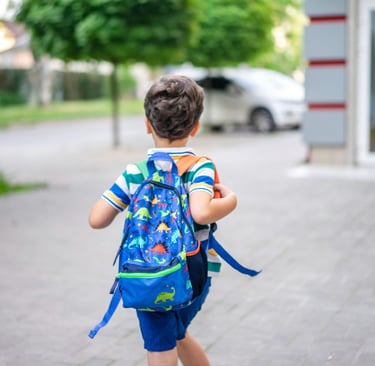
These supports reduce cognitive load, increase understanding, and offer a clear structure for the day. When the school year ends and these visual anchors suddenly disappear, anxiety can rise simply because the child no longer knows what to expect.
If your child relies on visuals or routines at school, it can be extremely helpful to bring copies home for the holiday period. Most teachers are more than happy to share the visuals and strategies that have been working well. Keeping continuity between school and home gives your child a familiar framework that helps them feel safe and capable. Visual structure is one of the most evidence-backed supports for children who experience anxiety, autism, ADHD, or sensory processing differences (Hodgdon, 1995; Mesibov et al., 2005).
Preparing for Sensory Overload
The Christmas season is rich in sensory experiences, but not all sensory experiences feel joyful. Lights, crowds, new smells, visiting relatives, noisy shopping centres, unfamiliar houses, late nights, and unpredictable environments can overwhelm a sensitive nervous system very quickly. Research on sensory modulation shows that children with sensory processing differences often reach their threshold sooner and with greater intensity during periods of environmental change (Miller et al., 2007; Dunn, 2014).
A simple way to support your child is to anticipate where sensory load will be high. You might choose quieter times for shopping, pack a small sensory kit for outings, identify a quiet retreat space during gatherings, or keep clothing soft and comfortable instead of formal or scratchy. These tools aren’t crutches they’re supports that allow your child to participate more fully and safely in the world.
Packing a Small Sensory Kit for Outings
One of the simplest but most effective ways to support your child during the holiday season is to bring along a small sensory kit whenever you go out. Think of this kit as your child’s “portable regulation toolbox”, a collection of items that help them feel grounded, calm, and in control when environments become overwhelming.
During Christmas, outings often involve bright lights, long lines, loud music, busy crowds, and unfamiliar places. Research on sensory modulation and self-regulation shows that when children have access to familiar sensory tools, their nervous system is better able to manage stress and maintain regulation (Miller et al., 2007; Dunn, 2014). Having these tools close by gives your child a sense of comfort, predictability, and agency, especially when entering unpredictable environments.
Your sensory kit doesn’t need to be large or complicated. In fact, the best kits are simple, lightweight, and tailored to your child’s specific sensory profile. For a child who becomes overwhelmed by noise, the kit might include soft headphones. For a child who seeks deep pressure or oral input, it might hold a chewy necklace or a fidget tool. For children who benefit from grounding through touch, a smooth stone or textured object can help reorient the nervous system.
Parents often tell us that having a sensory kit on hand helps them feel more prepared too. Instead of guessing what might help in the moment, you have a selection of regulation tools ready to offer when your child shows early signs of stress, catching dysregulation before it escalates.
You’re not trying to eliminate sensory experiences; you’re simply giving your child the support they need to participate without becoming overwhelmed. For many families, a sensory kit becomes just as essential as snacks, wipes, or spare clothes, a quiet reassurance that “we’ve got what we need if things get tough.”
Giving Your Child Time to Process What’s Coming
Children cope better with change when they have time to understand it. Talking through what will happen, who you’re visiting, how long you’ll stay, what the environment will be like, helps remove the uncertainty that can trigger anxiety. Some children benefit from looking at photos of the place you’re going. Others may need a simple visual schedule for the day, or a reminder that they can always ask for a break.
The goal isn’t to script every moment but to offer enough predictability that your child doesn’t feel blindsided by change. Research on child anxiety shows that previewing events significantly reduces stress because the brain feels more prepared and less threatened by the unknown (Beidas et al., 2013; Gray, 2010).
Gathering Important Information Before School Ends
The end-of-year rush can be chaotic for everyone, but it’s a valuable moment to connect with your child’s school. Therapists and teachers hold so much insight into what has supported your child throughout the year. Asking for updated strategies, communication tips, sensory routines, or recommendations can give you a strong foundation for the holidays. It also sets your child up for a smoother transition into the new year, especially if they’re moving to a new class or teacher.
Transition periods are well recognised in both OT and developmental research as high-stress moments for children with disabilities (O’Toole et al., 2018). Gathering information early ensures nothing important gets lost in the busyness.
Easing the Load at Home
It’s completely normal for children to become more tired, more emotional, or more sensitive as the school year comes to an end. Their bodies are fatigued, their routines are changing, and their nervous systems are trying to navigate a world that suddenly feels less predictable. During this time, lowering demands at home can make a significant difference.
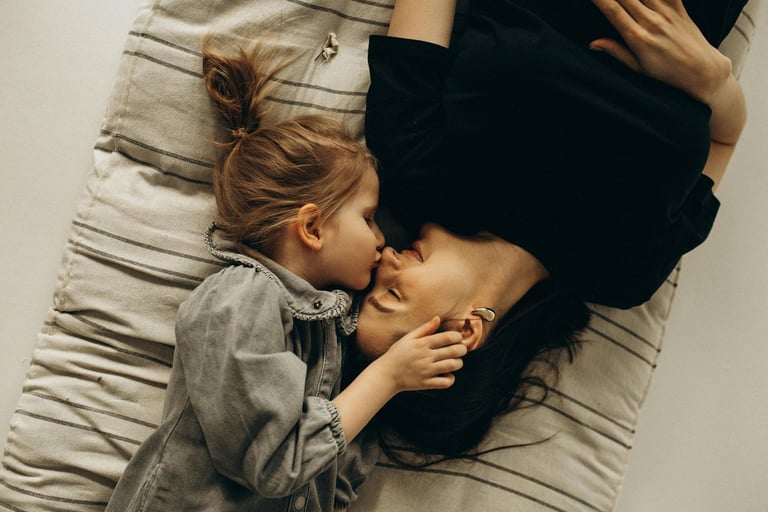
This might look like simplifying tasks, slowing down your afternoons, offering more cuddles or co-regulation moments, or allowing extra recovery time after big days. Co-regulation (calming through connection with a regulated adult) is one of the most powerful ways to support a child’s nervous system (Shanker, 2016). When you slow down, breathe more deeply, and offer presence, your child’s body naturally begins to settle as well.
Letting Your Child Lead Where Possible
Perhaps the most meaningful support you can offer is to follow your child’s pace. Not every child wants or enjoys the hustle and bustle of Christmas. Some thrive on excitement and novelty, while others need quiet, comfort, and familiarity. Occupational therapy is grounded in honouring the child’s unique ways of being in the world, their pace, their preferences, their sensory needs, and their capacity in the moment (Wilcock, 1998).
If your child needs shorter visits, more breaks, quiet time instead of crowds, or comfortable clothing instead of festive outfits, those adjustments aren’t inconveniences, they’re acts of attunement. They tell your child: “I see you. I understand you. I’m here with you.”
A Final Word
Your child doesn’t need a perfect Christmas. They need a Christmas that feels safe, supported, and manageable for their nervous system. With thoughtful preparation, gentle adjustments, and a compassionate understanding of what anxiety looks like in children with disabilities, you can help them step into the holiday season feeling grounded, understood, and deeply held.
And remember, supporting a child with big feelings can be emotionally demanding. If you need personalised strategies, guidance, or a plan that fits your family’s unique needs, our Therapists at Butterfly Health Group are here to help.
You don’t have to navigate this season alone.

Butterfly Health Group
Empowering individuals through personalised allied health services for all ages and facilitating improved quality of life.
admin@butterflyhealthgroup.com.au
0403755580
© 2025. All rights reserved.
Butterfly Health Group Privacy Policy